- ++8801924981649
- [email protected]
- Navana Barek Carmela, Baro Moghbazar

Eco friendly Architecture with Fire Escape Tower
Project Detail
Project Overview:
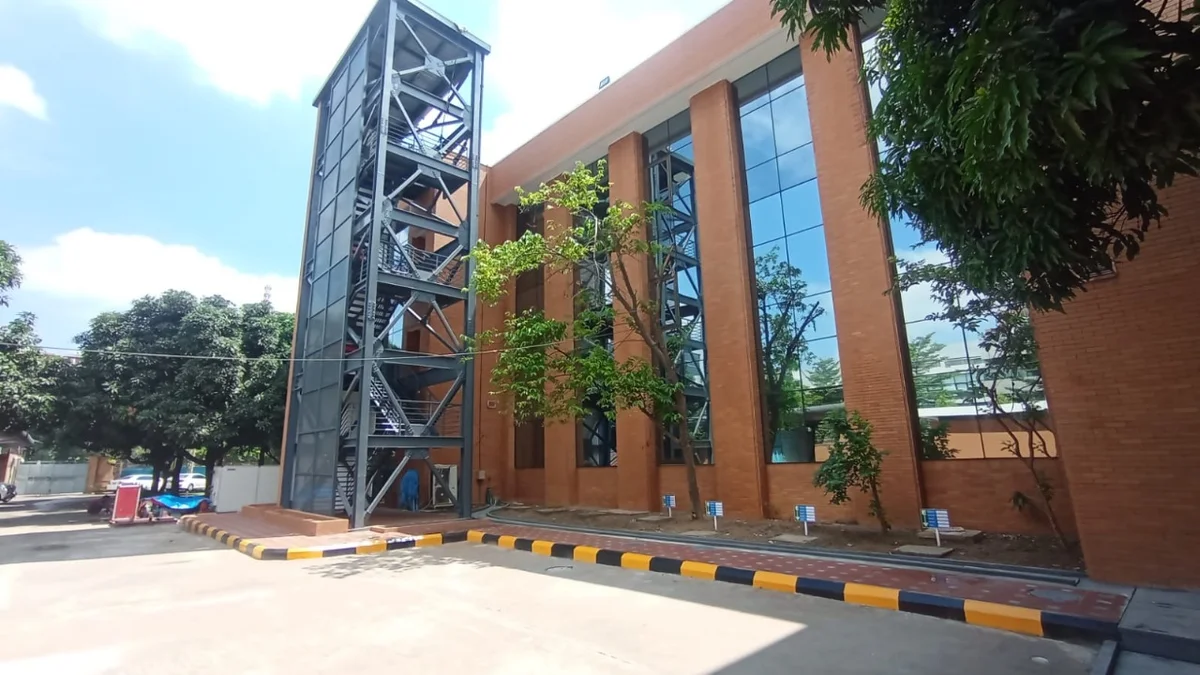
A New Benchmark for Modern, Sustainable Construction
Client Detail
Client
Nomaden Studio
Services
Design-Build Services
Project Timeline
3 months of work
Our Services
1. Design and Aesthetics:
A Fusion of Modernity and Warmth
The main building’s architectural design strikes a sophisticated balance between a contemporary, corporate look and a warm, inviting aesthetic.
Facade and Natural Light
Feature Design Rationale
Feature | Rationale |
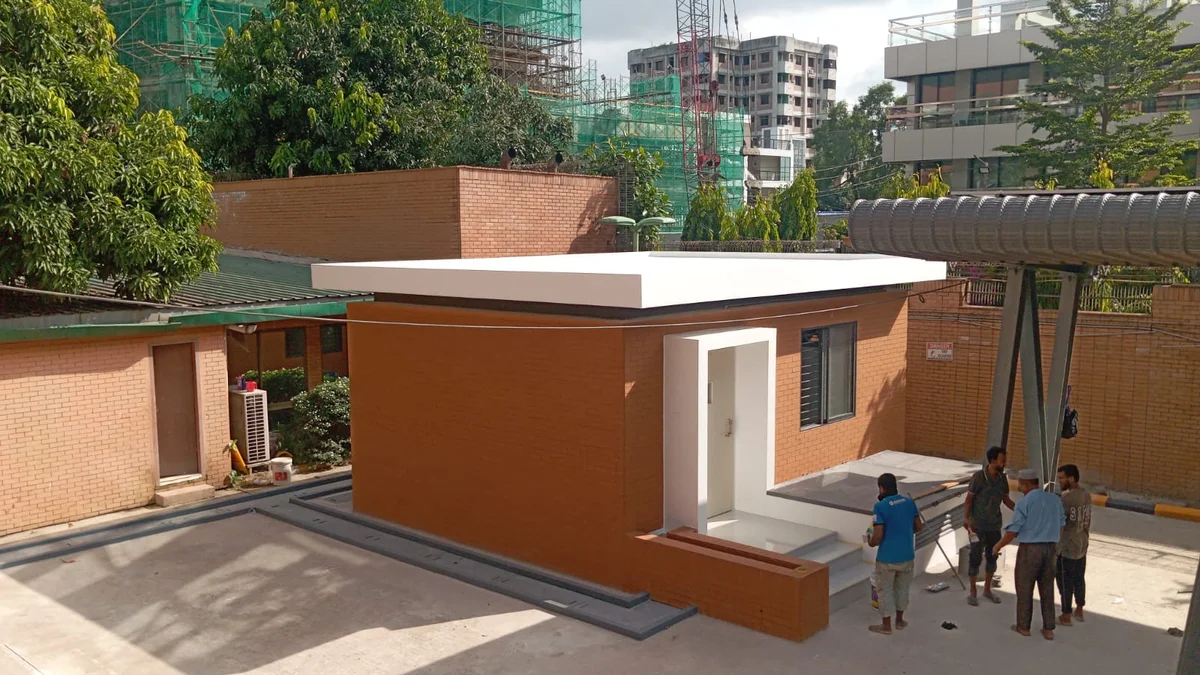
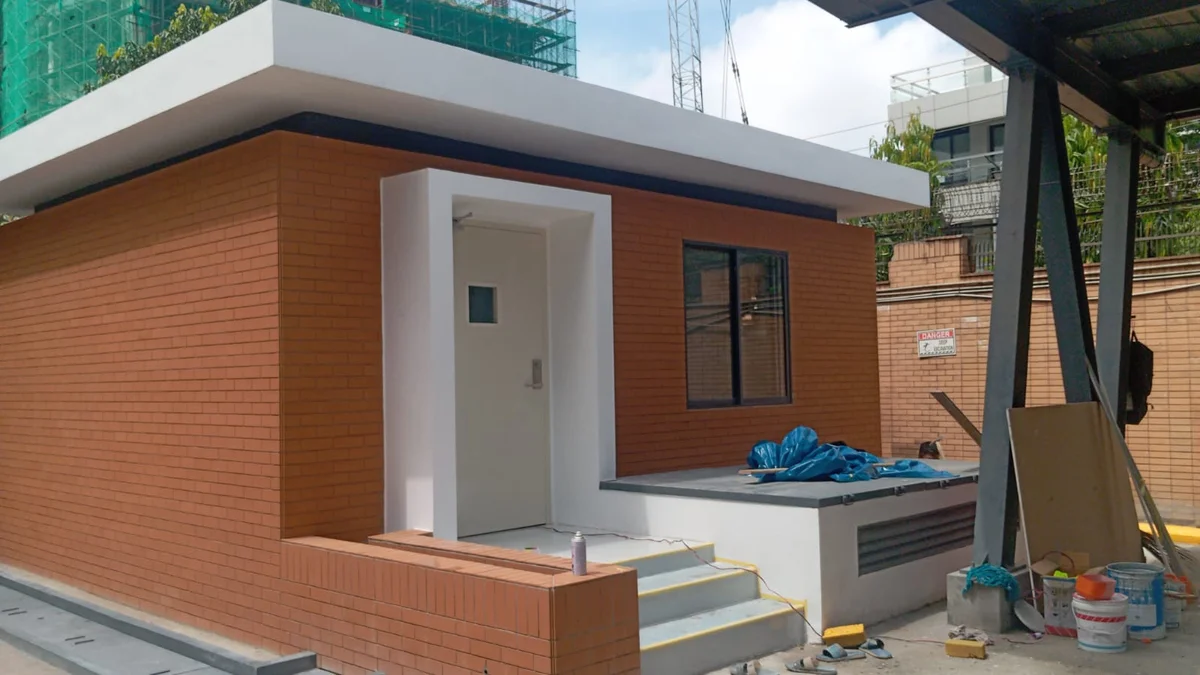
Material Consistency | The guard house and ancillary structures are finished with the same brick-like material, ensuring a cohesive and professional look across the entire complex. |
Clean Lines | The guard house features a crisp, white flat roof and minimalist entrance, reflecting a clean, functional design philosophy. |
Site Layout and Walkways
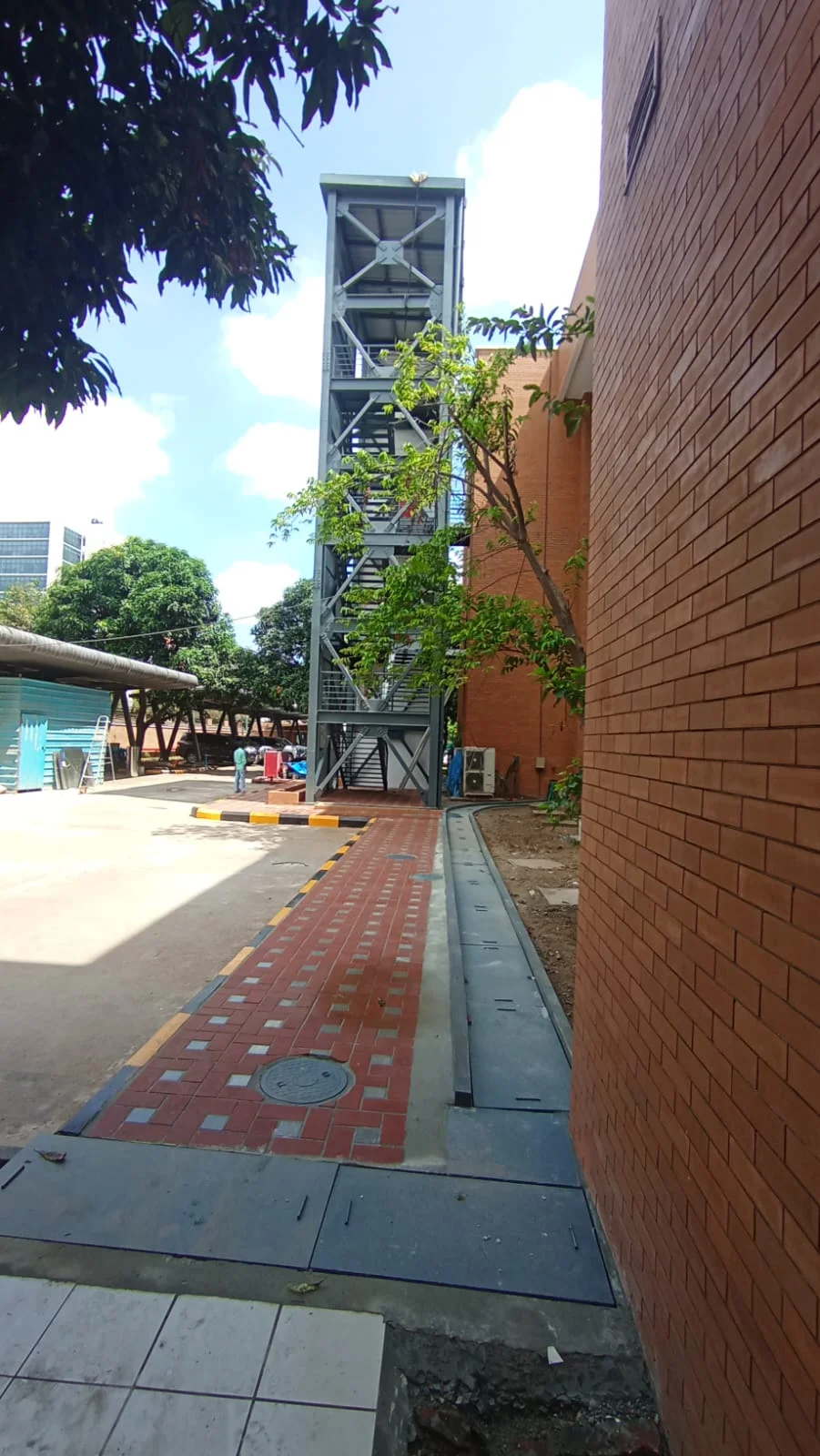
The external areas are meticulously planned for functionality and safety. We implemented a dedicated pedestrian walkway with contrasting pavers, clearly separating foot traffic from the vehicle movement areas.
Crucially, a robust, covered surface drainage system is integrated along the walkways. This is a vital engineering detail in Bangladesh, designed to efficiently manage heavy monsoon rainfall and prevent waterlogging, ensuring the site remains accessible and clean year-round.
2. Uncompromising Safety and Resilience
Safety was the single most critical factor in the design and construction of this facility. We have incorporated features that go far beyond minimum local requirements, aligning with global best practices like the International Building Code (IBC) and the Bangladesh National Building Code (BNBC) [1] [2].
The External Emergency Egress Tower
The most visible commitment to safety is the heavy-duty, external structural steel fire escape tower. This is not a simple staircase; it is an engineered system designed for maximum security during an emergency.
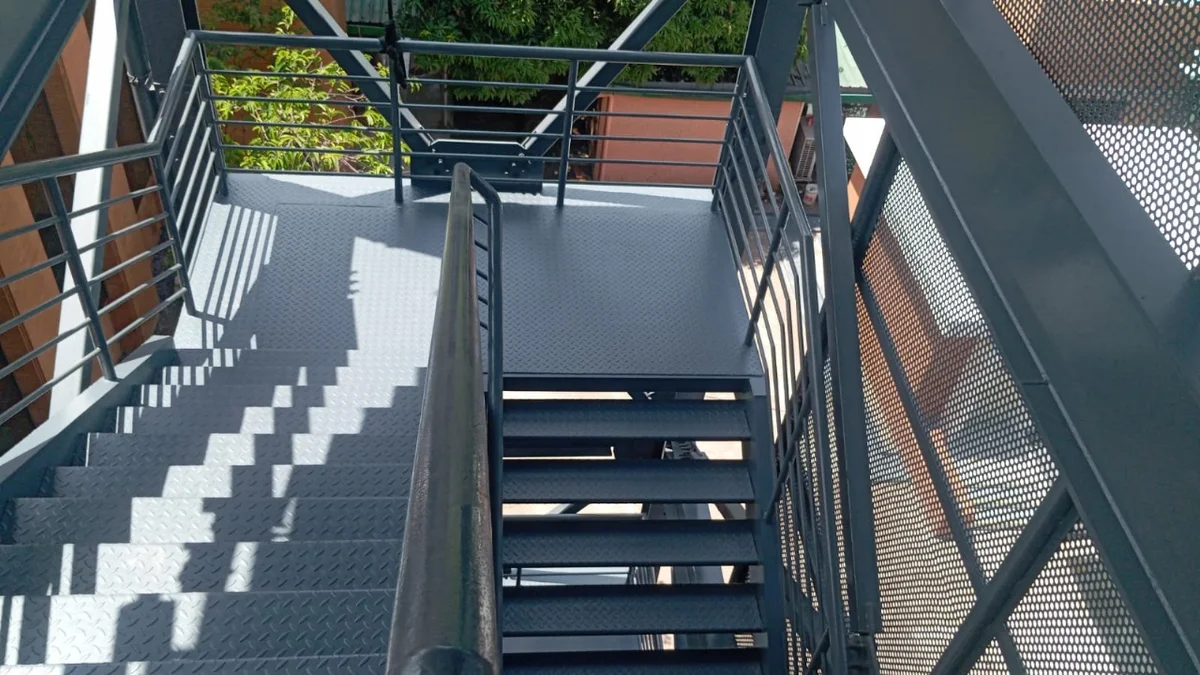
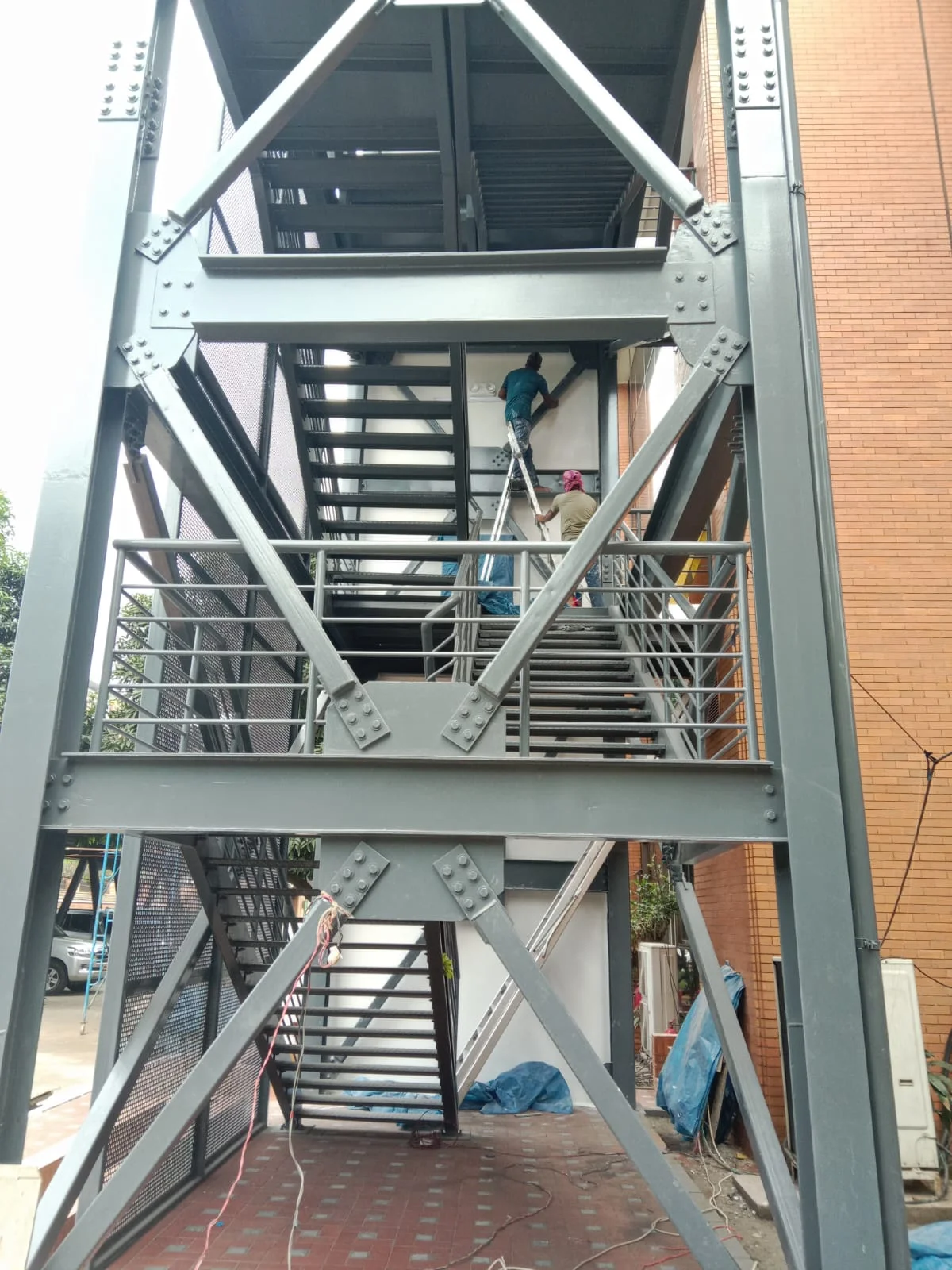
* Structural Independence: The tower is built to be structurally independent of the main building. This means that even in the unlikely event of a structural compromise to the main facility, the escape route remains intact and fully functional.
* Robust Construction: The structure utilizes bolted steel connections and features checker plate metal steps and landings. This material choice ensures a non-slip, highly durable surface that can withstand heavy use and exposure to the elements.
* Fire Suppression Integration: The presence of a dedicated red vertical pipe running alongside the building confirms the integration of a fire riser system, ready to supply water for fire suppression, a key requirement for modern commercial buildings.
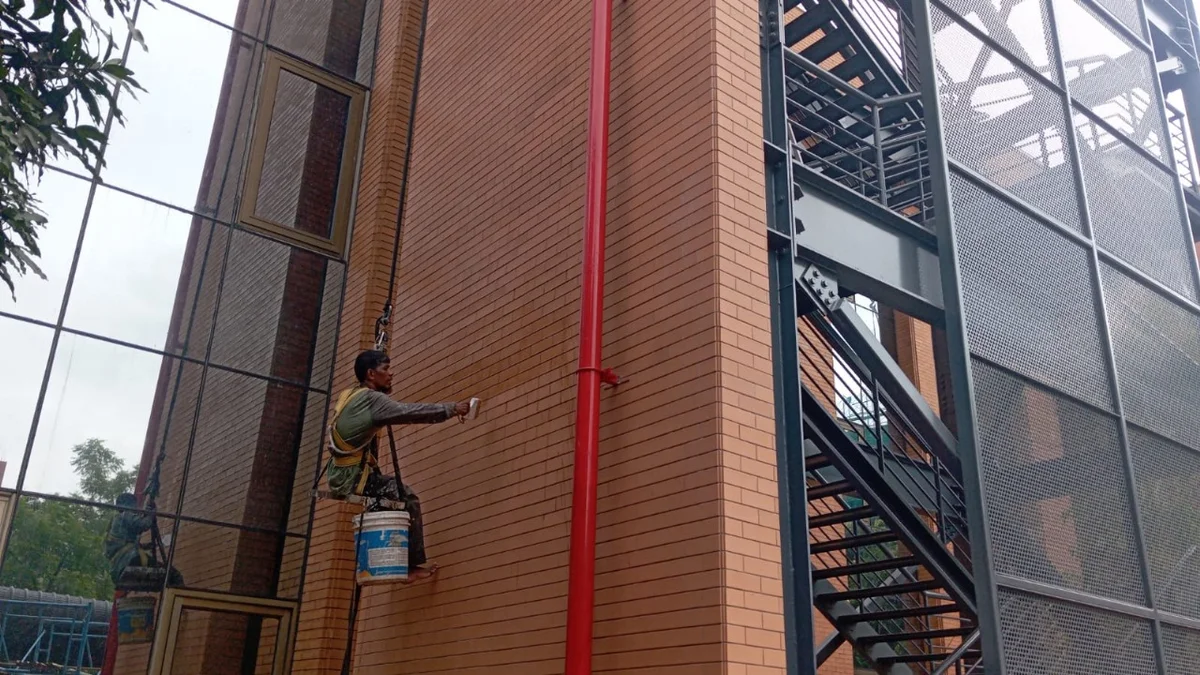
Construction Safety Protocol
During the construction phase, we maintained strict adherence to international safety protocols. The image showing a worker using a safety harness while painting the exterior is a direct reflection of our commitment to a zero-tolerance policy for unsafe work practices. This level of site management is a hallmark of a truly international-standard project.
3. Sustainability and Modern Engineering
Eco-Friendly Architectural Design and Construction Practices
The Sunlit Infrastructure Project is designed to be a model of sustainable construction, a critical imperative given that the global buildings and construction sector accounts for approximately 37% of energy-related CO2 emissions [4]. Our approach integrates both passive and active design strategies to minimize environmental impact and maximize operational efficiency, aligning with the performance benchmarks of global green building standards.
Key Sustainable Features and Performance Targets:
* Energy Efficiency through Passive Design: The extensive use of high-performance, reflective curtain wall glazing is a key passive design element. By maximizing natural daylight penetration, the design significantly reduces the need for artificial lighting, which is a major contributor to a building’s energy consumption. This strategy contributes to the goal of achieving a 25% reduction in energy consumption compared to conventional buildings, a standard set by LEED-certified projects [5].
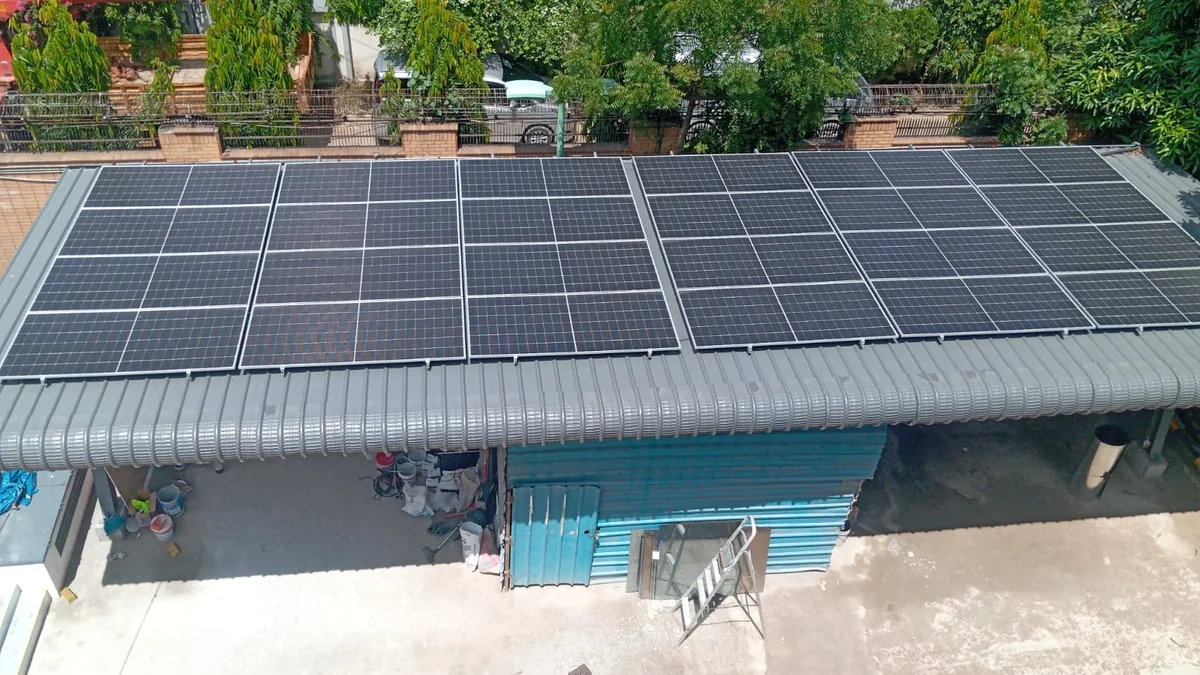
* Renewable Energy Generation: A large array of rooftop solar panels is installed on one of the covered structures. This system is designed to generate clean, renewable energy, substantially reducing the building’s reliance on the national grid and lowering its carbon footprint. This active energy generation directly contributes to a projected 34% reduction in carbon emissions from building operations [5].
* Water Management and Resilience: The robust, covered surface drainage system is engineered to manage the heavy monsoon rainfall of the region, preventing waterlogging and ensuring site resilience. Furthermore, the design incorporates water-efficient fixtures and landscaping strategies, aiming for an 11% reduction in water use compared to baseline buildings [5].
* Sustainable Material Selection: The use of durable, low-maintenance materials, such as the brick-like cladding and structural steel, ensures a long service life, reducing the need for frequent replacement and minimizing the project’s embodied carbon over time.
Covered Parking Facility
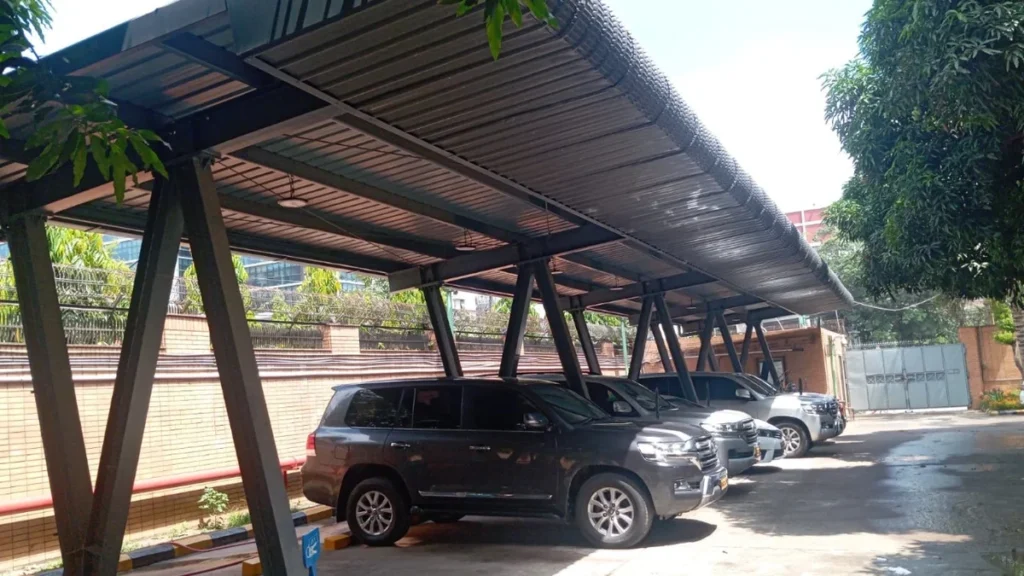
The dedicated, covered parking area, or carport, is built with a robust steel frame and a corrugated roof. This facility protects vehicles from the harsh sun and rain, contributing to the overall functionality and longevity of the site.
4. Project Management and Quality Assurance
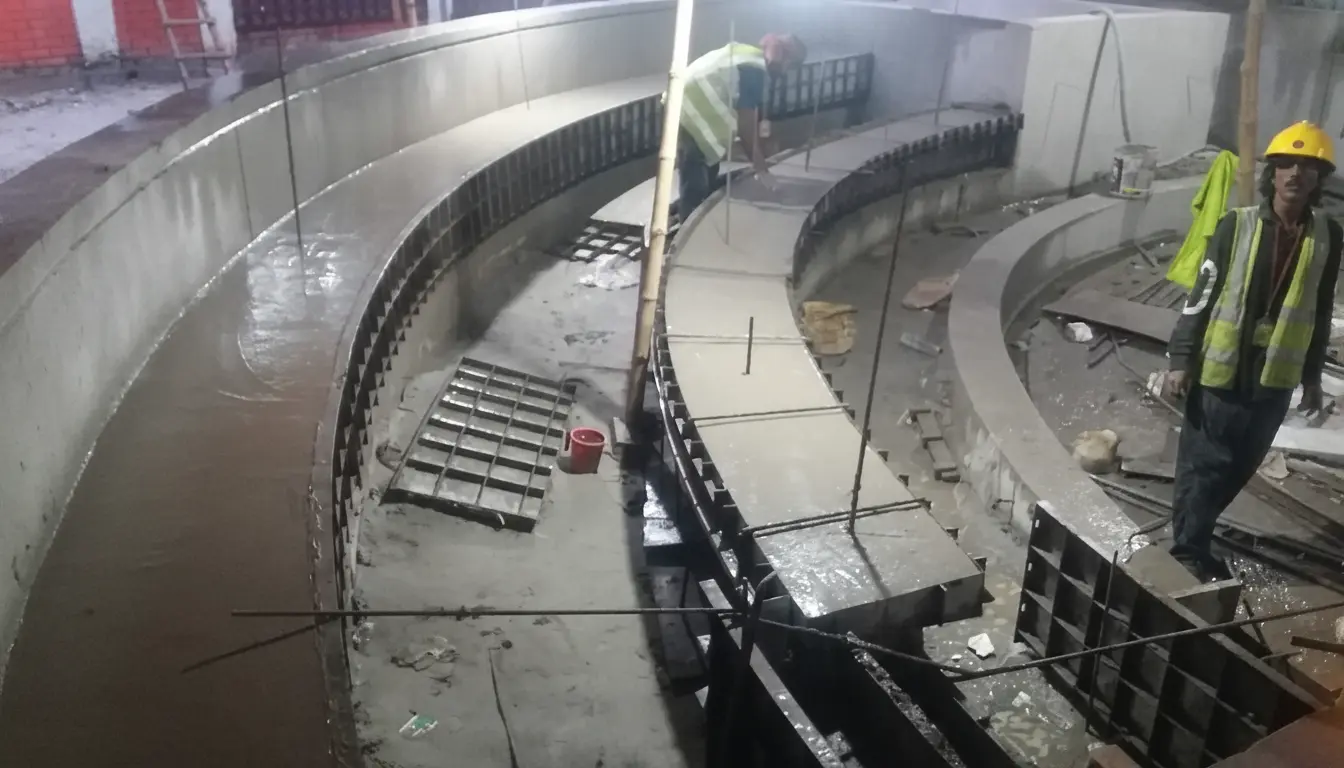
From the initial planning stages to the final finishing touches, the entire project was managed with a focus on precision and quality control.
Phase | Quality Assurance Focus |
Structural Phase | Ensuring all steelwork, concrete, and foundation elements meet specified load-bearing and seismic resistance requirements, as mandated by the BNBC. |
Finishing Phase | Strict quality checks on the facade installation, glazing, and interior finishes to ensure aesthetic perfection and long-term weather resistance. |
Safety and Compliance | Continuous monitoring to ensure all fire safety systems, including the egress tower and fire suppression, are installed to code and fully operational. |

5. Sustainable Future
The result is a facility that is not just structurally sound, but a beautiful, safe, and sustainable environment built to serve its occupants for decades to come. Sunlit has delivered a project that truly sets a new standard for infrastructure development in the region.
References
[1] Bangladesh National Building Code (BNBC) 2020.
[2] International Code Council (ICC) – International Building Code (IBC) Chapter 10: Means of Egress.
[3] International Electrotechnical Commission (IEC) Standards for Photovoltaic Modules (e.g., IEC 61215, IEC 61730).
[4] United Nations Environment Programme (UNEP). (2023). Building Materials And The Climate: Constructing A New Future.
[5] U.S. Green Building Council (USGBC). (2024). USGBC Impact Report. Data on LEED-certified buildings’ performance.