
AC Leak Repair ঢাকা ২০২৬: এসি…
ঢাকায় এসি লিকের দুটি প্রধান কারণ: (১) পানি লিক — ড্রেন পাইপ বন্ধ বা ড্রেন…
Dhaka is facing a multi-faceted water crisis, a convergence of rapid urbanization, severe pollution, and the accelerating impacts of climate change. But these are not just separate challenges on a list; they are gears in a vicious cycle, where each problem feeds the next. This article moves beyond the headlines to reveal six of the most impactful realities of this crisis, uncovering the domino effect that defines the struggle for water in one of the world’s fastest-growing cities.
Turning on a tap and getting clean water is an act of simple faith. We expect it to be there—safe, reliable, and abundant. Yet behind this daily convenience lies a vast, often invisible system of engineering, resource management, and governance. In a megacity like Dhaka, Bangladesh, delivering this simple necessity to millions is a task of immense complexity, strained by the relentless pressures of a rapidly growing urban landscape.
Ranked as the 7th most climate-affected nation globally from 2000-2019, Bangladesh stands on the front lines of the climate crisis. For Dhaka’s water system, climate change is not a distant forecast but a present-day threat multiplier that exacerbates every existing weakness.
More frequent and intense floods, driven by extreme weather, consistently overwhelm the city’s drainage and sewerage infrastructure. During these events, the lines between sanitation and floodwater blur catastrophically.
Studies have documented how “floodwater mix[es] with raw sewage from submerged sewerage system[s] and overflowing manholes,” a grim reality made visible by “big bubbles coming from a manhole indicating mixing of sewage and floodwater.” This foul mixture directly contaminates surface water sources and, through infiltration, the very groundwater the city depends on.
This environmental pressure is compounded by human migration. As climate change makes rural livelihoods more precarious, millions are moving to urban centers, placing an unimaginable strain on already fragile city infrastructure, from housing to the water supply itself.
In Bangladesh, over thirteen million people are predicted to migrate to cities by 2050, with a significant amount of this migration being brought on by climate change. There will be difficulties in city life. Apart from the dearth of employment opportunities and public amenities, migrants may encounter climate-related hazards such as heat waves, floods, diseases, and restricted availability of food and water.
This strategy is so central that a survey found 84% of residents identify the Dhaka Water Supply and Sewerage Authority (DWASA)—an agency heavily reliant on groundwater—as their main water source. But why does the city drill so relentlessly into the earth? The answer lies in the rivers that surround it.

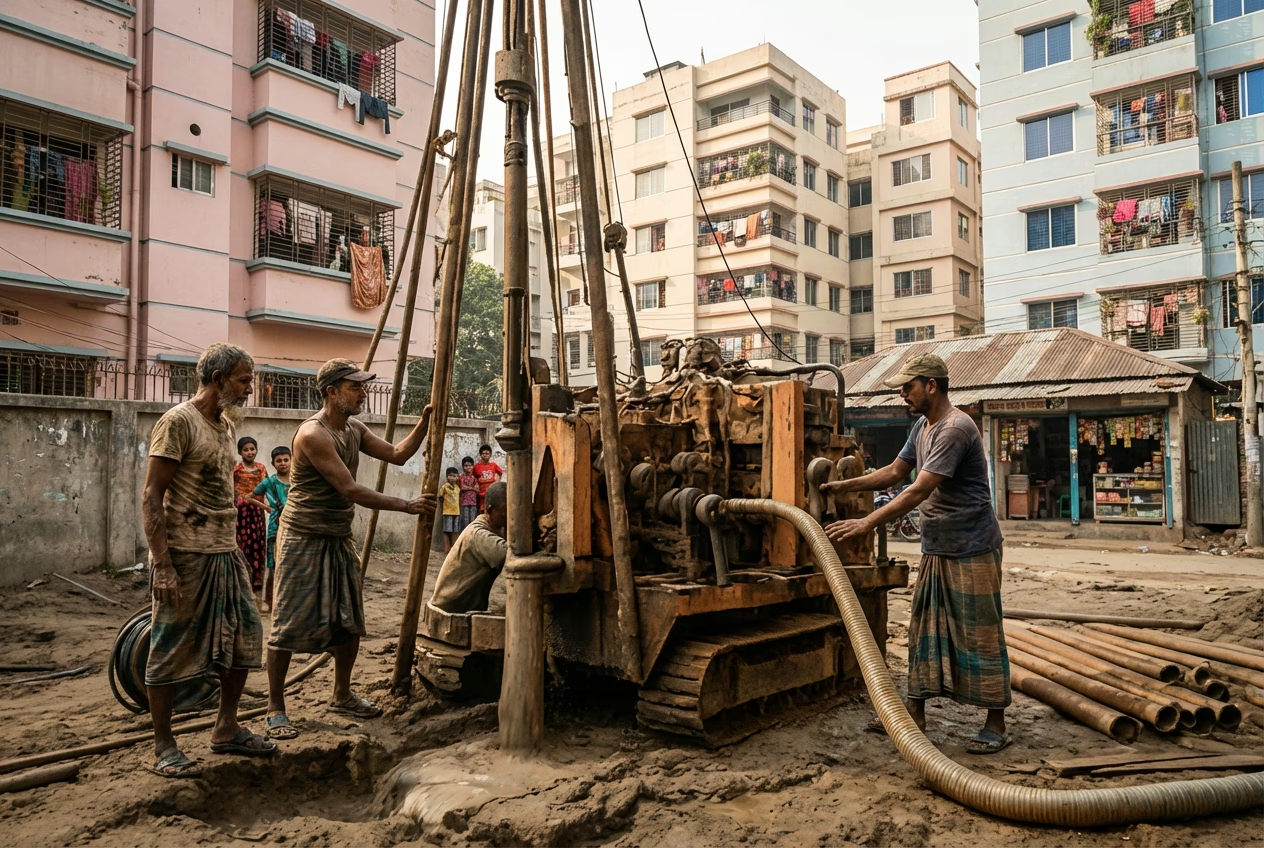
Before we get to the rivers, however, this over-extraction has a startling and perilous consequence: land subsidence. As underground aquifers are depleted faster than they can be replenished, the land above them literally sinks. This means the millions of “residents of Bangladesh’s major cities… walk and construct their buildings on top of vulnerable ground.” The very act of securing water is making the city’s foundations physically unstable and introducing a catastrophic risk. Since Bangladesh sits at the conjunction of three tectonic plates, this human-induced subsidence can trigger earthquakes, making the ground beneath millions of residents a seismic liability.
Furthermore, borehole drilling and water extraction beyond the capacity of the aquifer can cause subsidence, or a caving in or sinking of the land, which can trigger earthquakes. This is especially dangerous since Bangladesh sits at the conjunction of three tectonic plates.
Dhaka’s unsustainable dependence on groundwater is not a choice, but a necessity born from a bitter paradox: the city is encircled by rivers like the Buriganga, Lakhya, and Turag, yet it cannot safely drink from them.
Decades of untreated industrial effluent and domestic sewage have rendered the water quality unacceptable. The problem becomes acute during the dry season when river flows are low and pollutant concentrations skyrocket, making conventional treatment prohibitively difficult and expensive. The rivers that should be the city’s lifeline have become its sewers.
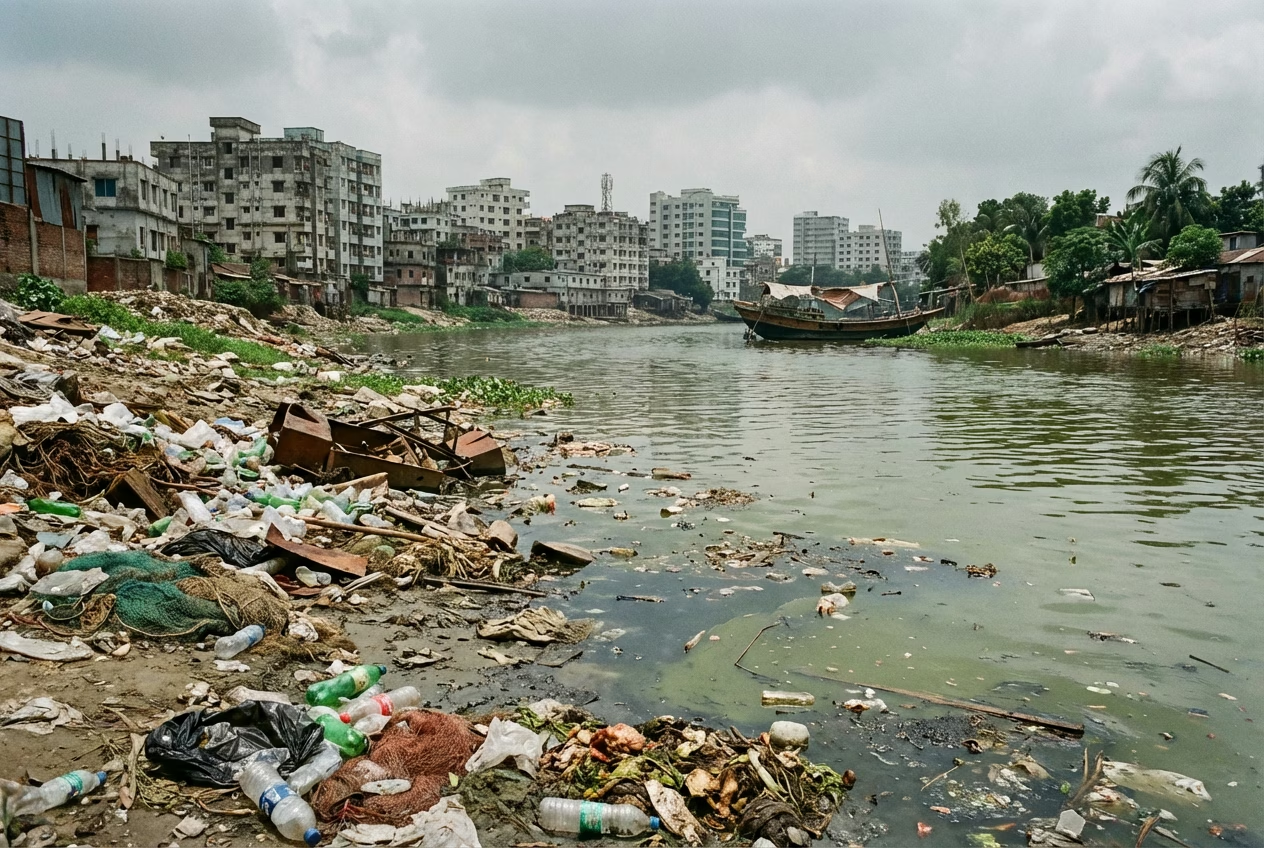
This forces DWASA to look far beyond the city’s immediate periphery for cleaner sources. The agency’s master plan involves a monumental shift toward abstracting water from the more distant Padma and Meghna rivers. This reactive, engineering-heavy strategy requires building massive new Surface Water Treatment Plants (SWTPs), such as the Gandharbapur and Jashaldia plants, and constructing extensive transmission mains to transport the treated water back to the city—an immense logistical and financial undertaking forced by the failure to protect local water bodies.
However, the water quality in Lakhya (downstream of Majhina), Balu, Buriganga and Turag River has deteriorated extensively. Water quality is progressively declining due to an increase in pollution load from various domestic and industrial sources.
Even when clean water is produced, its journey from the treatment plant to the tap is fraught with risk. The city operates on an intermittent water supply, meaning service is not available 24/7. While it can reach around 22 hours per day, the system is prone to interruptions and significant leakage, contributing to high levels of what is known as Non-Revenue Water (NRW), water that has been produced and treated but is lost before it reaches the customer, bleeding the system of both precious water and money.
Heavy, dark curtains can block a significant amount of natural light. Opt for lightweight and sheer fabrics like linen or cotton that allow sunlight to filter through while still providing privacy. If you need blackout options for bedrooms, consider a double-rod system with a sheer layer for the daytime and a heavier curtain for the night.
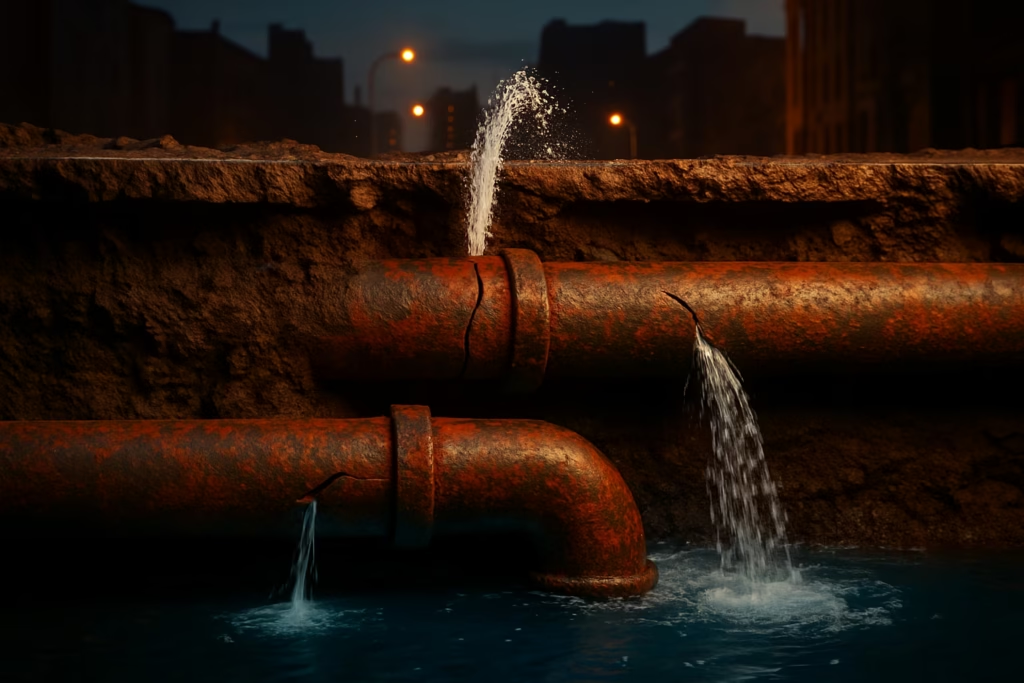
This intermittency creates a terrifying pathway for contamination. During non-supply hours or periods of low pressure, a negative pressure, or suction, can form within the water mains. This effect actively draws in contaminants from the surrounding soil—including raw sewage from leaking sewer lines—through cracks and faulty joints. This means that a family in Dhaka could be diligently boiling their water to kill pathogens, only for new ones to be injected into the supply line just a few hundred meters from their home.
This reveals a two-front war against contamination. A study in India showed that upgrading to a continuous 24/7 supply reduces the risk of diseases like typhoid fever. However, it doesn’t eliminate all waterborne illness, as household storage practices can re-contaminate water. Even if DWASA perfects its massive distribution network, re-contamination can still occur at the “last foot”—inside the home itself.
Contaminants enter into the water distribution main through leaks due to negative (suction) pressure during non-supply hours.
Solving Dhaka’s water crisis will require a colossal financial investment. The infrastructure upgrades needed—shifting from over-exploited groundwater to distant surface water, building new treatment plants, and rehabilitating the leaky, aging distribution network—are enormous in scale and cost.
The projected demand underscores the urgency. The required water production capacity is expected to increase by 2.5 times by 2035, reaching 5,268 million liters per day (MLD). To make the necessary projects financially viable, the Dhaka Water Supply Master Plan makes a direct and unavoidable recommendation: the price of water for consumers must go up significantly and consistently.
It can be recommended from the financial analysis that the tariff may be raised every year by 6% for all users. This increase is an important strategy to ensure the feasibility of the projects that will be undertaken by DWASA.
While Dhaka grapples with its reactive, engineering-heavy strategy, another Bangladeshi city offers a model for a more sustainable path forward. Rajshahi City has demonstrated a proactive, nature-based approach to urban environmental management.
Instead of waiting for a crisis, the city government took decisive steps to protect its water resources. Through a city-wide project, Rajshahi dredged twenty ponds to preserve its surface water. This simple initiative serves multiple purposes: it helps maintain the local groundwater table, protects endangered fish species, and conserves a vital natural resource. This is part of a broader strategy that includes promoting zero-emission electric rickshaws and enacting bylaws that require businesses to use carbon capture and recycling technology.
Rajshahi’s success is not a magic bullet, but it serves as a powerful case study. It proves that locally-led, integrated solutions that weave together urbanization, transport, and climate resilience are possible, offering a compelling alternative to Dhaka’s costly, large-scale engineering projects.
The model that Rajshahi City’s government adopted should be carefully considered by other cities for replication as a comprehensive and integrated solution that takes into account the interactions between urbanization, transportation, and climate change.
Source: https://epicenter.wcfia.harvard.edu/blog/cities-bangladesh-must-refocus-combat-climate-change
Dhaka’s water story is a complex system of interconnected crises, a vicious cycle where climate change fuels migration, which increases demand for groundwater, which causes the city to sink, which is a consequence of polluted rivers that can’t be used, forcing the city to rely on a contamination-prone pipe network that requires a massive, expensive overhaul.
The challenges are staggering, but as the case of Rajshahi shows, pathways to a more sustainable future exist. They require a shift in thinking—from reacting to crises with ever-larger engineering projects to proactively building resilient, integrated urban systems. As megacities around the world face similar pressures, the ultimate question for Dhaka is not just how to find more water, but how to break the cycle and build an equitable and sustainable system for generations to come. What will it take to turn that blueprint into a reality?
1.Is Dhaka’s tap water safe to drink?
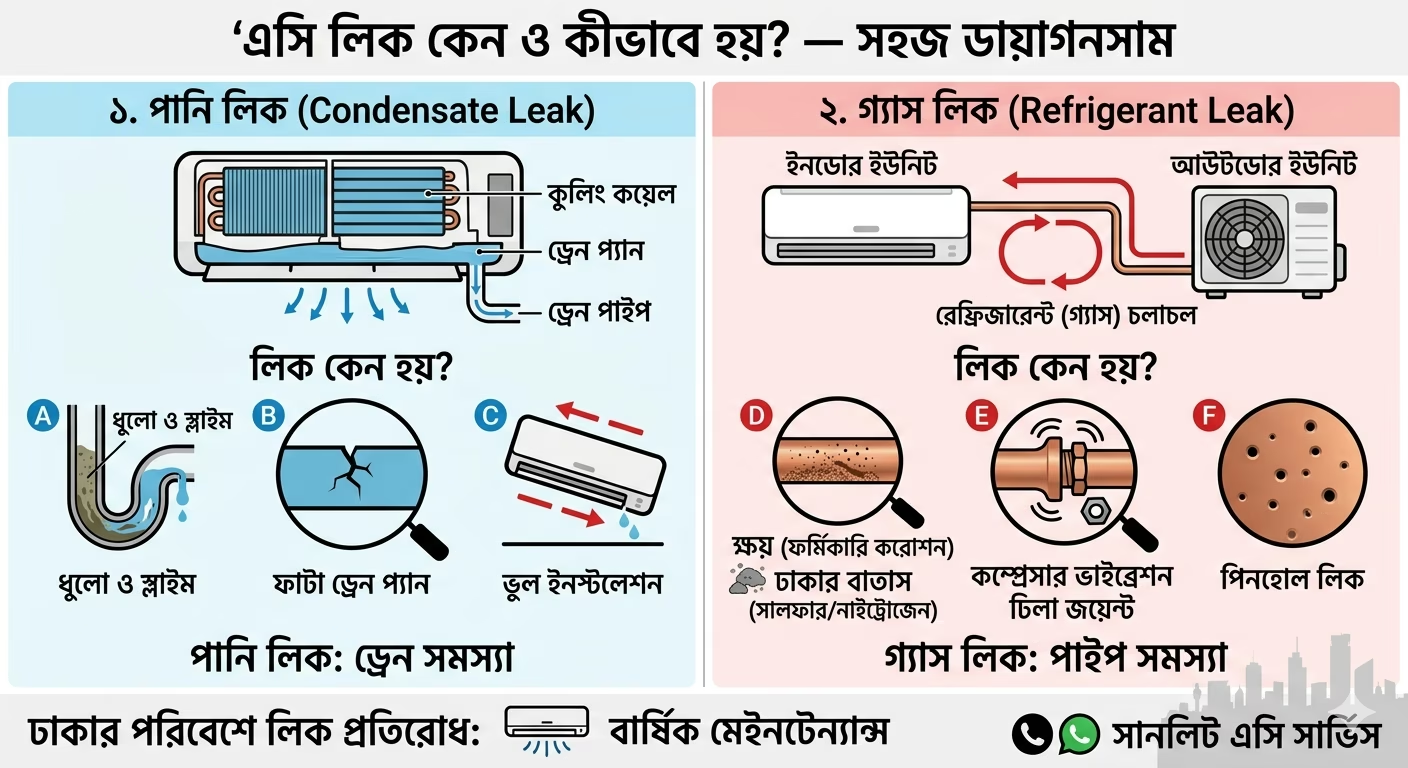
ঢাকায় এসি লিকের দুটি প্রধান কারণ: (১) পানি লিক — ড্রেন পাইপ বন্ধ বা ড্রেন…
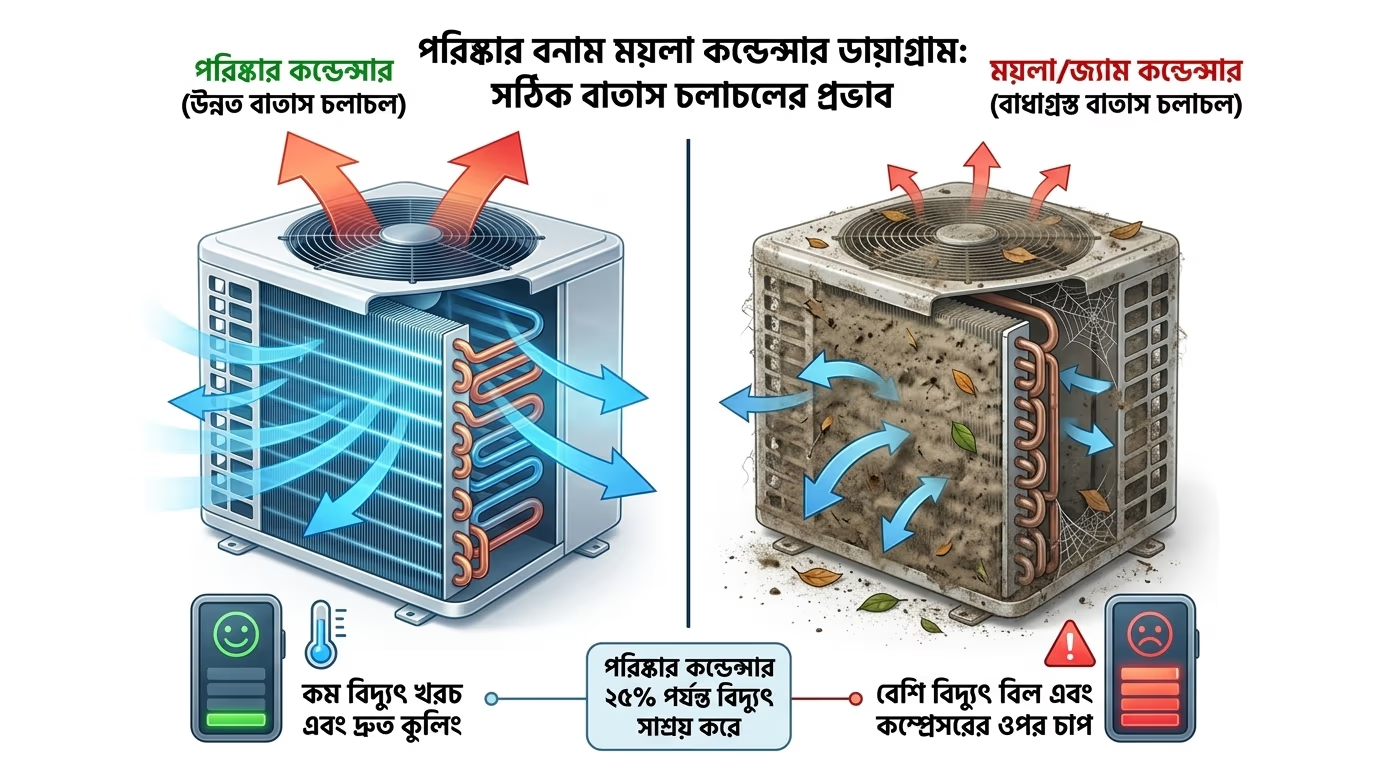
ঢাকার উত্তরা (Sector 1-18) এবং বসুন্ধরা আবাসিক এলাকার বাসিন্দারা একটি সাধারণ সমস্যায় ভোগেন—এসি সার্ভিসিং করার…

২০২৬ সালে ব্যবহারের ধরণ ও বাজেট অনুযায়ী সেরা ব্র্যান্ডগুলো হলো: প্রিমিয়াম ও হেভি ডিউটির জন্য…
